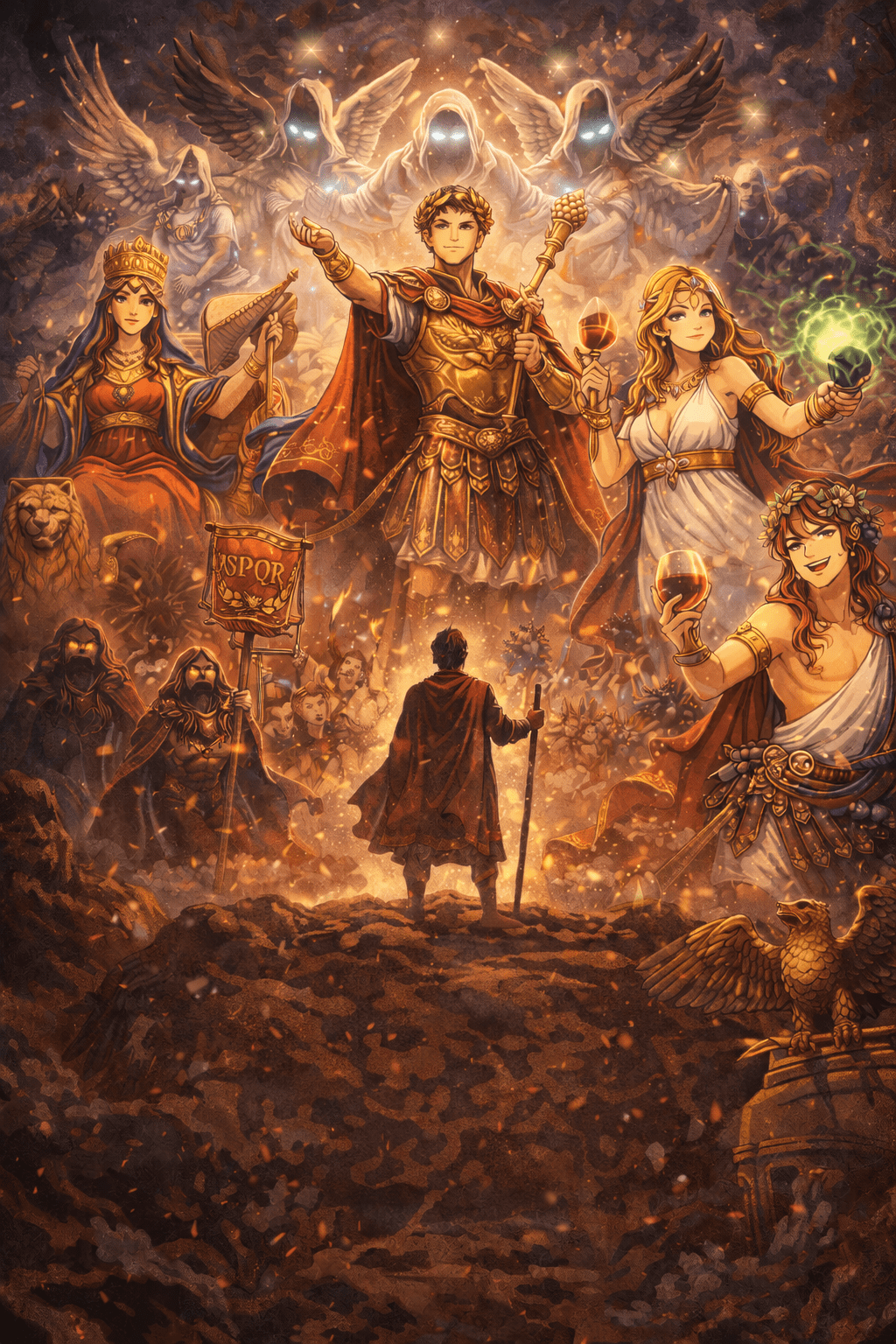
The modern Artemis moon program by NASA is an interesting choice of name. Most people hear it and think little more than “Apollo had a twin sister in Greek mythology.” The Apollo program went to the moon in the 1960s. Artemis is the next generation. It is clever, poetic, perhaps a bit nostalgic. The gods of the ancient world have become little more than memes to us. They live on as planets, constellations, sports teams, software projects, and perhaps as characters in a game of Dungeons & Dragons or Pokémon.
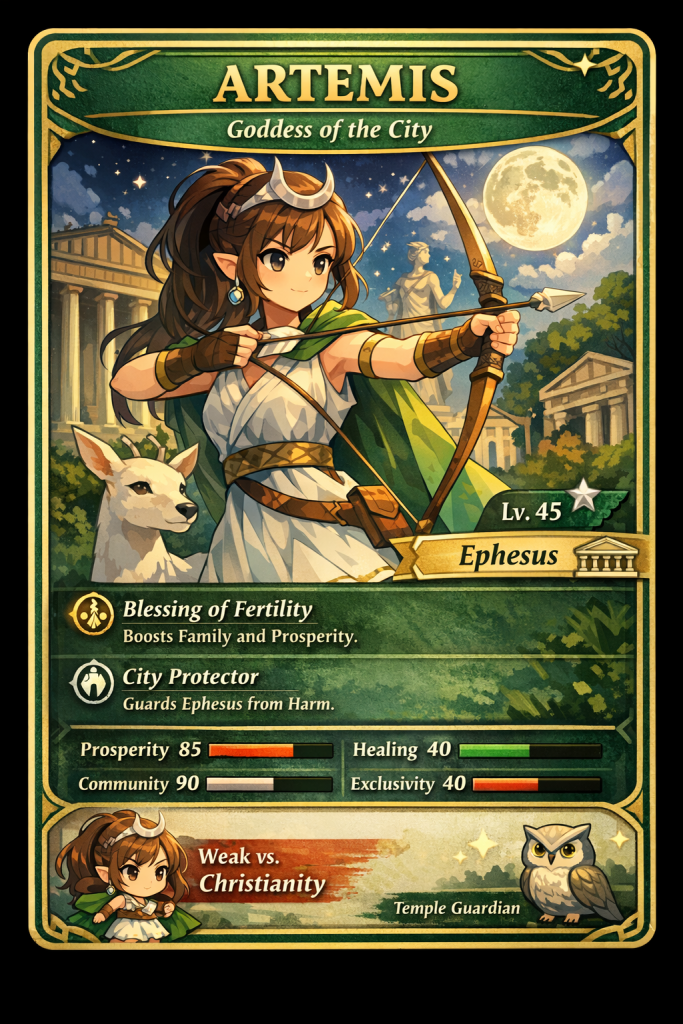
But for the first Christians, Artemis was not a bit of ancient trivia. Fun? No, she was a real riot! (…you can laugh, it’s funny.) That thought struck me while reading about the Artemis missions and reflecting on the strange distance between our world and theirs. almost as if the people who came to the cities of ancient Rome talking about the GodMan Jesus were from another planet. We hear “Artemis” today and picture a NASA rocket. The people of Ephesus heard “Artemis” and pictured the towering temple that dominated their city, the silver idols in their homes, the annual festivals, the pride of their economy, and the protection of the goddess herself. To reject Artemis was not merely to reject a religion. It was to reject Ephesus itself.
What’s below this line is very much a draft, I’ll probably update it quite a bit after I have a couple of rounds of conversation with real game experts, I’m pretty boring on that front.
That gave me an idea. What if we thought about the spread of Christianity across the Roman Empire the way we might think about a role-playing game or Pokémon? It’s just a way to help explain it to people, maybe in the form of a game analogy that may be a little more fun and learning something that sounds like dry history otherwise. Jerusalem is the starting town, this backwater place was no fun for the idol worshipers of the Hellenistic ancient world. The people there were too stiff and only accepted one idea of God. It was from this odd group that a cool new action figure rose from the dead with superpowers! Persecuted and chased out by those in Jerusalem, they brought this competing idea into the marketplace of idols that was ancient Rome.
At first, everywhere they went outside of the original surrounding towns of Jerusalem, people were very curious about this man who claimed to be God. The disciples begin with almost nothing: a handful of followers, no money, no political power, and no army. Then they move outward from city to city, each place with its own local “boss battle,” its own patron deity, special gifts, cultural temptation, or rival claim to demand loyalty. If you were a merchant and moved to a new city, you might keep your old gods, but you definitely picked up the new gods of the city in order to gain its blessing of prosperity in that town. 
Of course, the comparison is playful. St. Paul did not travel with a backpack full of Poké Balls and say, “Christ, I choose you!”. It was quite the other way around, after he rejected Christ for a long period of time he was the one that was chosen. Peter did not enter Corinth and challenge Aphrodite to a duel in the temple courtyard. Yet the analogy is not as absurd as it first appears. The first-century Roman world was crowded with gods, cults, temples, mystery religions, local superstitions, and civic loyalties. Every city had its own identity and its own promise. and while people certainly took them very seriously, as was extremely evident from the writings of the time we’re denying the deity of a local city would often mean to torture or death. But it was also very much a conversation point of curiosity as they traveled around.
I thought it might be a fun way to follow the story arc of the book of Acts.
| Acts Passage | City / Region | Approx. Date | “Card” Encountered | Story Beat |
|---|---|---|---|---|
| Acts 2 | Jerusalem | AD 30 | Christianity Begins | Pentecost; the “starter town” where the church is born. |
| Acts 4–7 | Jerusalem | AD 30–33 | Judaism / Temple Establishment | The apostles first clash with the religious authorities rather than pagan idols. |
| Acts 8:9–24 | Samaria | AD 33–34 | Witches and Wizards | Simon Magus, the famous sorcerer, attempts to buy the power of the Holy Spirit. This is the first magical “mini-boss.” |
| Acts 13:6–12 | Paphos, Cyprus | AD 46–47 | Witches and Wizards | Paul confronts Elymas the magician in the court of the Roman proconsul. |
| Acts 14:8–18 | Lystra | AD 47–48 | Zeus and Hermes | The crowd thinks Paul and Barnabas are gods. Barnabas is called Zeus and Paul Hermes. |
| Acts 16:16–24 | Philippi | AD 49–50 | Witches and Wizards | Paul casts out the spirit from a slave girl used for fortune-telling. Her owners react violently because their profits vanish. |
| Acts 17:16–34 | Athens | AD 50 | Philosophers and the Many Gods | Paul walks through a city “full of idols,” culminating in the debate at Mars Hill. |
| Acts 17:1–9 | Thessalonica | AD 50 | Cabirus / Caesar | Thessalonica’s civic identity was closely tied to local cults and loyalty to Rome. Paul is accused of proclaiming “another king, Jesus.” |
| Acts 18:1–17 | Corinth | AD 50–52 | Aphrodite of Corinth | Corinth’s temptations of pleasure, status, and immorality become a major theme of Paul’s ministry and later letters. |
| Acts 19:1–20 | Ephesus | AD 53–55 | Witches and Wizards | The sons of Sceva attempt to use the name of Jesus like a spell and are beaten by the demoniac. Magic books are publicly burned. |
| Acts 19:21–41 | Ephesus | AD 54–55 | Artemis of Ephesus | The great “gym battle” of Acts. The silversmiths riot and shout, “Great is Artemis of the Ephesians!” |
| Acts 21–23 | Jerusalem | AD 57 | Judaism / Temple Authorities | Paul returns to Jerusalem and is nearly killed in the Temple. |
| Acts 24–26 | Caesarea | AD 57–59 | Caesar (through Roman Governors) | Paul stands before Felix, Festus, and Agrippa and finally appeals to Caesar. |
| Acts 27–28 | Malta to Rome | AD 59–60 | Caesar Draws Near | The journey to the final boss: storm, shipwreck, and arrival in the capital. |
| Acts 28:16–31 | Rome | AD 60–62 | Caesar | Paul reaches Rome itself, the center of imperial power and emperor worship. The book ends with Christianity in Caesar’s city. |
| After Acts (tradition) | Rome | AD 64–67 | Caesar — Final Boss | Under Nero, Peter and Paul are executed. The confrontation between “Jesus is Lord” and “Caesar is Lord” becomes complete. |
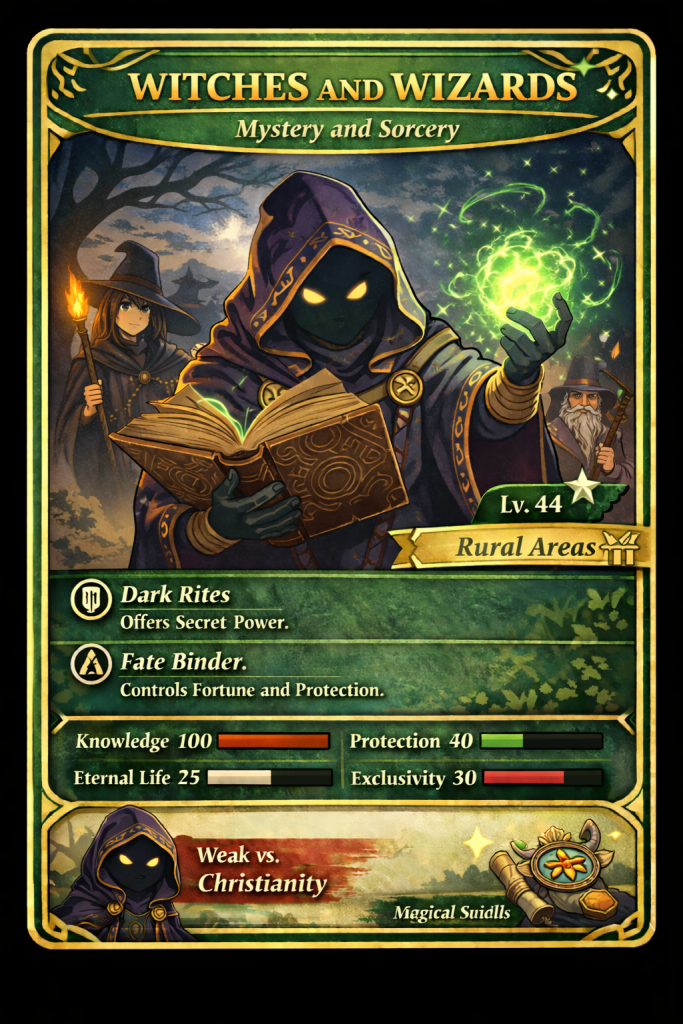
You can see that the first real movement of Christianity outside of the Jewish world was to a magician who attempted to co-op to the name of Jesus for its magic powers, or so he thought. He ended up walking away with a beating, as just trying to put the words in motion did not do anything to actually invoke the power of this God. We found out that the rules were different for Jesus than they were for casting spells. While there was clearly power of Christianity over a small backwater, which doctors, magicians, and demons, one could not simply conjured his powers. The dynamic of belief as the ultimate objective of Christianity, not co-opting its blessing apart from the person of Jesus, change the rules of the game.
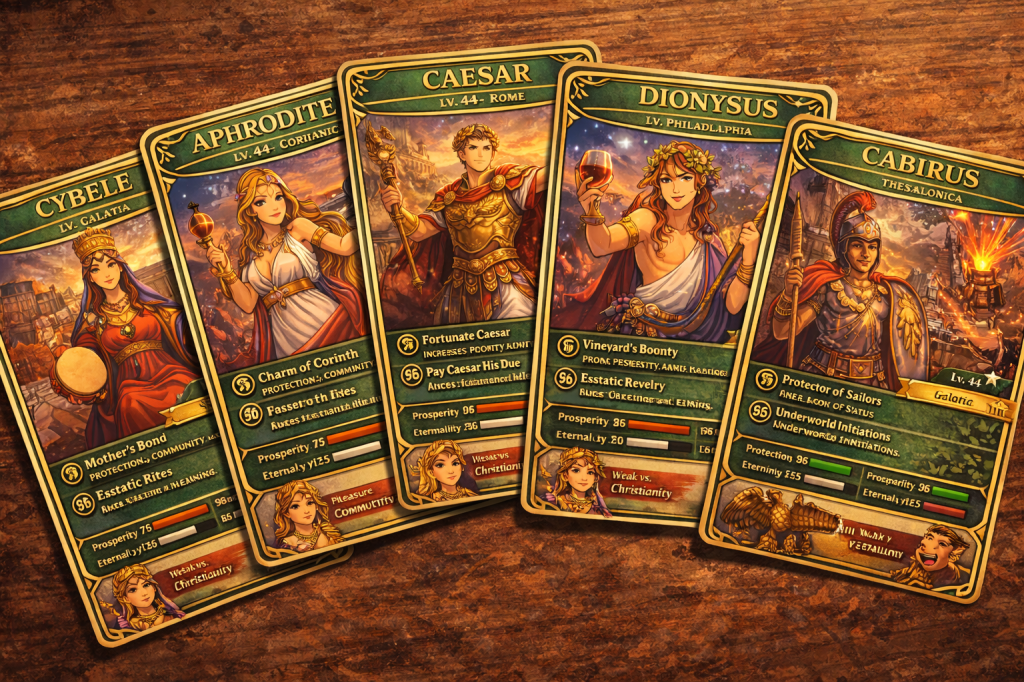
Just for fun, since I made up that card, I made up several others that reflect some of the common cultural battles that occur occurred as Christianity moved into the cities talked about across the New Testament. Of course, I don’t know much about Pokémon, so I’m hoping my kids and others will come up with better versions of these! But it was fun :-)
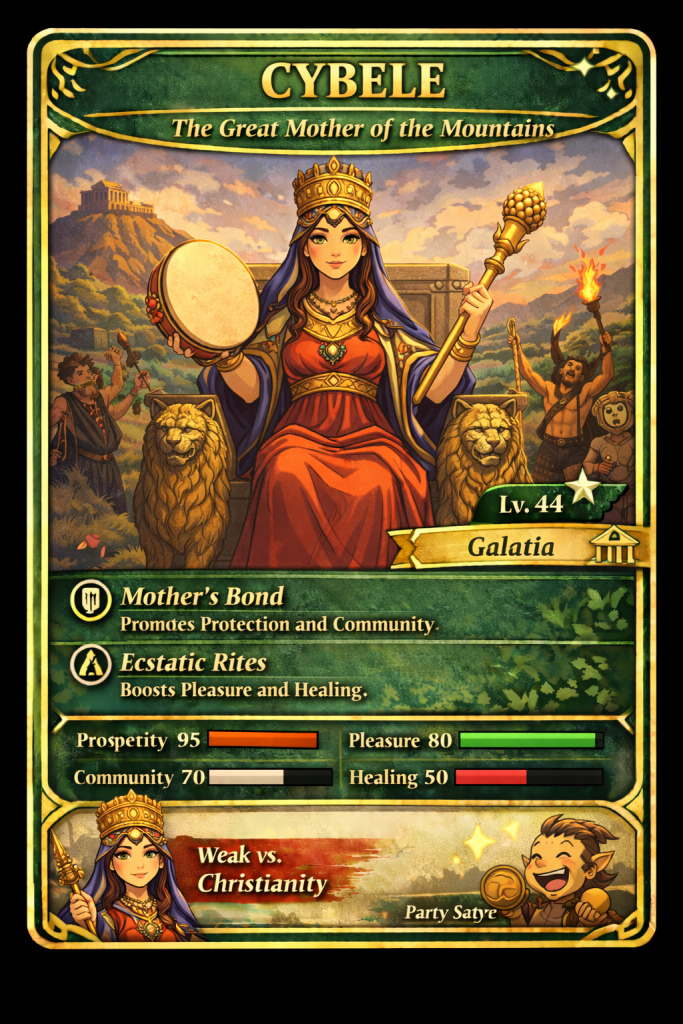
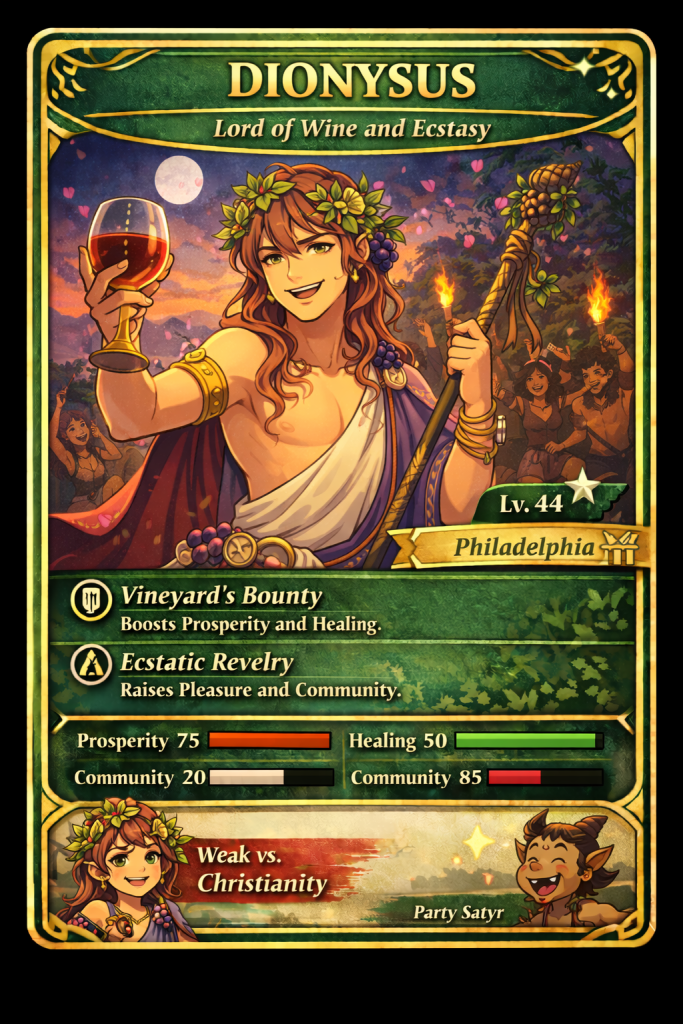
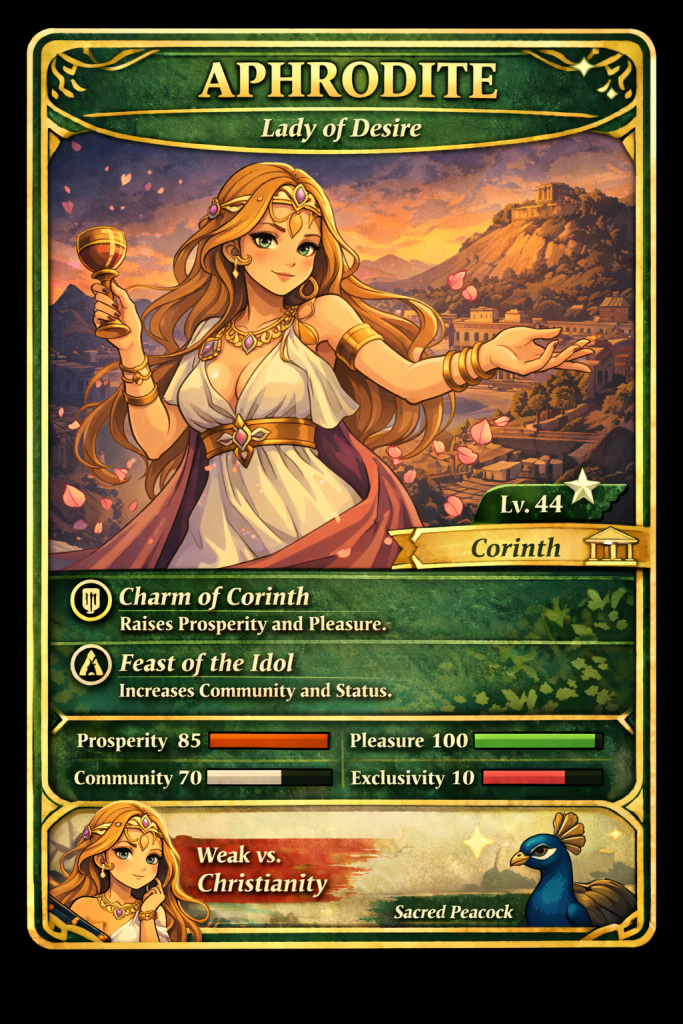
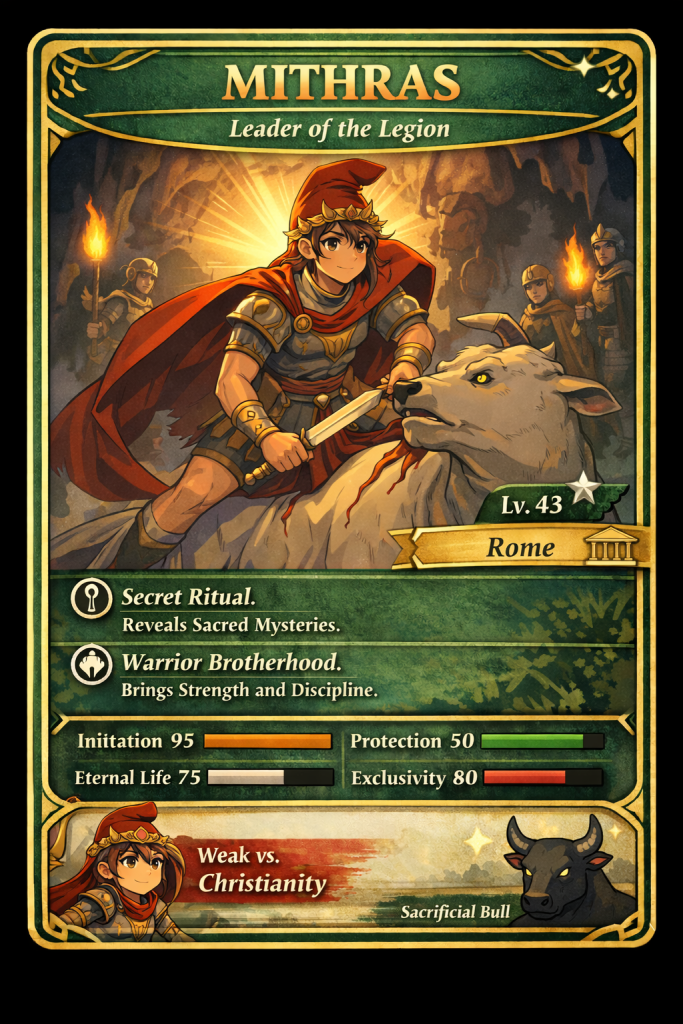
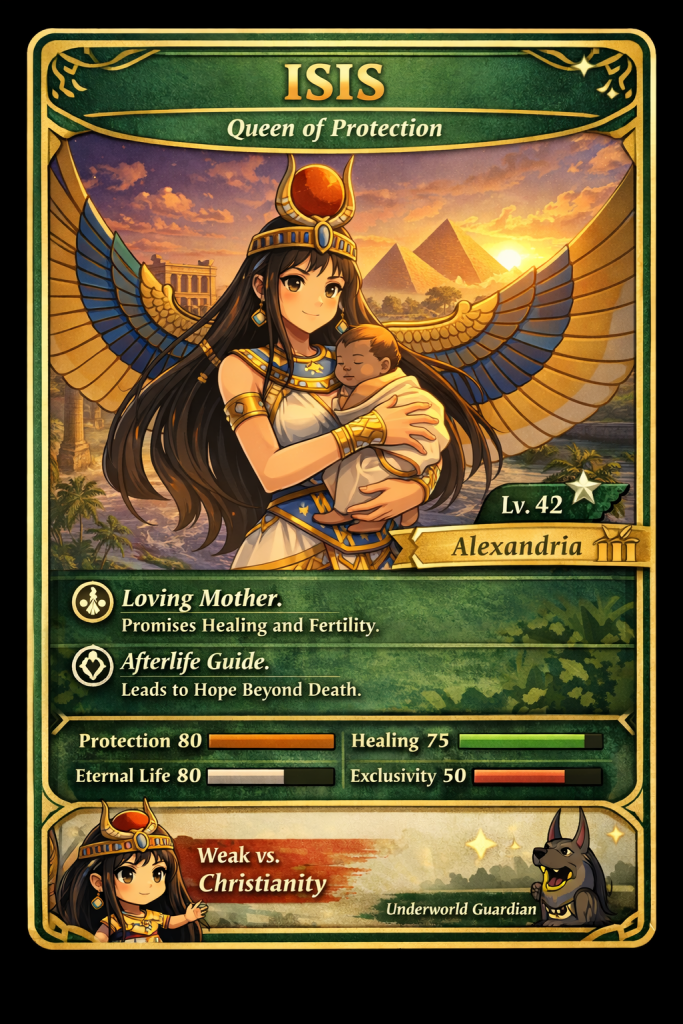
Rome tolerated nearly all of them. You could add one more god to the shelf. You could worship Artemis and Dionysus and Isis and Caesar all at once if you wished. Religion in the Roman world was often less like joining an exclusive club and more like building a custom deck of cards.
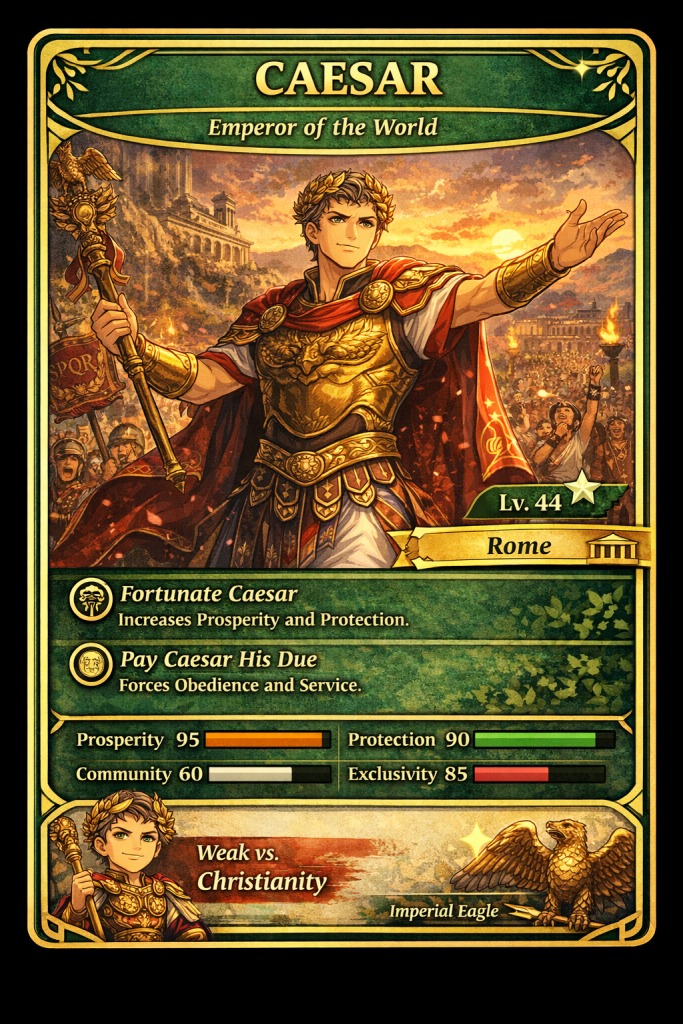
Christianity entered the Roman world making an outrageous and inconvenient claim: there is one Lord, and He is not merely another option among the others. Jesus is not a local deity for Judea. He is Lord over every city, every nation, every ruler, every temple, every spirit, every power, and every god.
That was why Christianity was so disruptive. The Roman Empire could tolerate one more god. It could not tolerate a God who demanded the place of all the others. Unlike the other idols, you couldn’t just collect Christ. He was game over for these powerful idols that have vanished from human experience.
Catch me?

 Theology Pub
Leave a comment