Search

Theology Pub

Open Dialogue in the Public House about Gospel > Worship > Discipleship

Category

Theology Pub Outline

Romémon (Roman Pokémon)

The modern Artemis moon program by NASA is an interesting choice of name. Most people hear it and think little more than “Apollo had a twin sister in Greek mythology.” The Apollo program went to the moon in the 1960s. Artemis is the next generation. It is clever, poetic, perhaps a bit nostalgic. The gods of the ancient world have become little more than memes to us. They live on as planets, constellations, sports teams, software projects, and perhaps as characters in a game of Dungeons & Dragons or Pokémon.

But for the first Christians, Artemis was not a bit of ancient trivia. Fun? No, she was a real riot! (…IYKYK, you can laugh, it’s funny. If you don’t know, read Acts 19:24-35). That thought struck me while reading about the Artemis missions and reflecting on the strange distance between our world and theirs. almost as if the people who came to the cities of ancient Rome talking about the GodMan Jesus were from another planet. We hear “Artemis” today and picture a NASA rocket. The people of Ephesus heard “Artemis” and pictured the towering temple that dominated their city, the silver idols in their homes, the annual festivals, the pride of their economy, and the protection of the goddess herself. To reject Artemis was not merely to reject a religion. It was to reject Ephesus itself.

What’s below this line is very much a draft, I’ll probably update it quite a bit after I have a couple of rounds of conversation with real game experts, I’m pretty boring on that front.

FIRST UPDATE: I had a chat with someone who took it too literally- there is no actual intent to make this a game. Instead, it is intended to spark a bit of humor while sparking a serious discussion of what actually happened in the book of Acts. People in the first century, while traveling between cities would collect idols, so then what happened with the advent of Christianity was massively disruptive in a way modern folks don’t quite get.

(…my first reader noted there is no Jesus card… and then told me about Magikarp… so, yeah, no game mechanics here. In fact, the intended humor is how most attempts at Christians making games, cartoons, and superheros come across pretty lame. Except Narnia. And maybe Veggie Tales.)


That gave me an idea. What if we thought about the spread of Christianity across the Roman Empire the way we might think about a role-playing game or Pokémon? It’s just a way to help explain it to people, maybe in the form of a game analogy that may be a little more fun and learning something that sounds like dry history otherwise. Jerusalem is the starting town, this backwater place was no fun for the idol worshipers of the Hellenistic ancient world. The people there were too stiff and only accepted one idea of God. It was from this odd group that a cool new action figure rose from the dead with superpowers! Persecuted and chased out by those in Jerusalem, they brought this competing idea into the marketplace of idols that was ancient Rome.

Artemis Romémon card

At first, everywhere they went outside of the original surrounding towns of Jerusalem, people were very curious about this man who claimed to be God. The disciples begin with almost nothing: a handful of followers, no money, no political power, and no army. Then they move outward from city to city, each place with its own local “boss battle,” its own patron deity, special gifts, cultural temptation, or rival claim to demand loyalty. If you were a merchant and moved to a new city, you might keep your old gods, but you definitely picked up the new gods of the city in order to gain its blessing of prosperity in that town. 

Of course, the comparison is playful. St. Paul did not travel with a backpack full of Poké Balls and say, “Christ, I choose you!”. It was quite the other way around, after he rejected Christ for a long period of time he was the one that was chosen. Peter did not enter Corinth and challenge Aphrodite to a duel in the temple courtyard. Yet the analogy is not as absurd as it first appears. The first-century Roman world was crowded with gods, cults, temples, mystery religions, local superstitions, and civic loyalties. Every city had its own identity and its own promise. and while people certainly took them very seriously, as was extremely evident from the writings of the time we’re denying the deity of a local city would often mean to torture or death. But it was also very much a conversation point of curiosity as they traveled around.

I thought it might be a fun way to follow the story arc of the book of Acts.

Acts Passage City / Region Approx. Date “Card” Encountered Story Beat
Acts 2 Jerusalem AD 30 Christianity Begins Pentecost; the “starter town” where the church is born.
Acts 4–7 Jerusalem AD 30–33 Judaism / Temple Establishment The apostles first clash with the religious authorities rather than pagan idols.
Acts 8:9–24 Samaria AD 33–34 Witches and Wizards Simon Magus, the famous sorcerer, attempts to buy the power of the Holy Spirit. This is the first magical “mini-boss.”
Acts 13:6–12 Paphos, Cyprus AD 46–47 Witches and Wizards Paul confronts Elymas the magician in the court of the Roman proconsul.
Acts 14:8–18 Lystra AD 47–48 Zeus and Hermes The crowd thinks Paul and Barnabas are gods. Barnabas is called Zeus and Paul Hermes.
Acts 16:16–24 Philippi AD 49–50 Witches and Wizards Paul casts out the spirit from a slave girl used for fortune-telling. Her owners react violently because their profits vanish.
Acts 17:16–34 Athens AD 50 Philosophers and the Many Gods Paul walks through a city “full of idols,” culminating in the debate at Mars Hill.
Acts 17:1–9 Thessalonica AD 50 Cabirus / Caesar Thessalonica’s civic identity was closely tied to local cults and loyalty to Rome. Paul is accused of proclaiming “another king, Jesus.”
Acts 18:1–17 Corinth AD 50–52 Aphrodite of Corinth Corinth’s temptations of pleasure, status, and immorality become a major theme of Paul’s ministry and later letters.
Acts 19:1–20 Ephesus AD 53–55 Witches and Wizards The sons of Sceva attempt to use the name of Jesus like a spell and are beaten by the demoniac. Magic books are publicly burned.
Acts 19:21–41 Ephesus AD 54–55 Artemis of Ephesus The great “gym battle” of Acts. The silversmiths riot and shout, “Great is Artemis of the Ephesians!”
Acts 21–23 Jerusalem AD 57 Judaism / Temple Authorities Paul returns to Jerusalem and is nearly killed in the Temple.
Acts 24–26 Caesarea AD 57–59 Caesar (through Roman Governors) Paul stands before Felix, Festus, and Agrippa and finally appeals to Caesar.
Acts 27–28 Malta to Rome AD 59–60 Caesar Draws Near The journey to the final boss: storm, shipwreck, and arrival in the capital.
Acts 28:16–31 Rome AD 60–62 Caesar Paul reaches Rome itself, the center of imperial power and emperor worship. The book ends with Christianity in Caesar’s city.
After Acts (tradition) Rome AD 64–67 Caesar — Final Boss Under Nero, Peter and Paul are executed. The confrontation between “Jesus is Lord” and “Caesar is Lord” becomes complete.

Local Magician Romémon card

You see in the first real movement of Christianity outside of the Jewish world was to a magician who attempted to co-opt to the name of Jesus for its magic powers, or so he thought. He ended up walking away with a beating, as just trying to put the words in motion did not do anything to actually invoke the power of this God. We found out that the rules were different for Jesus than they were for casting spells. While there was clearly power of Christianity over a small backwater, which doctors, magicians, and demons, one could not simply conjured his powers. The dynamic of belief as the ultimate objective of Christianity, not co-opting its blessing apart from the person of Jesus, change the rules of the game.

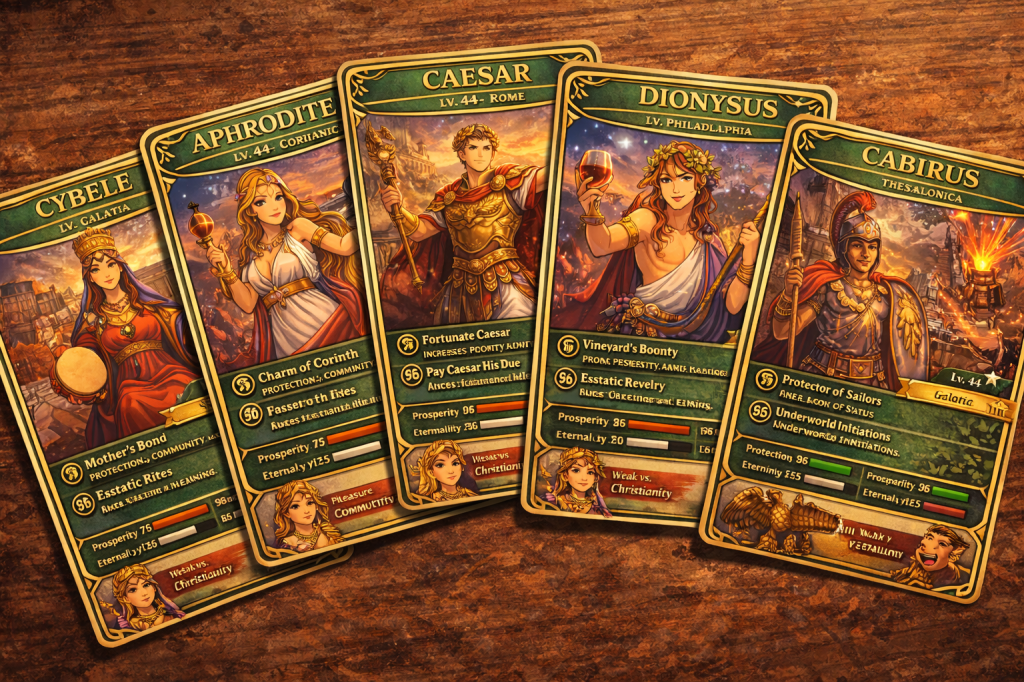
Just for fun, since I made up that card, I made up several others that reflect some of the common cultural battles that occur occurred as Christianity moved into the cities talked about across the New Testament. Of course, I don’t know much about Pokémon, so I’m hoping my kids and others will come up with better versions of these! But it was fun :-)

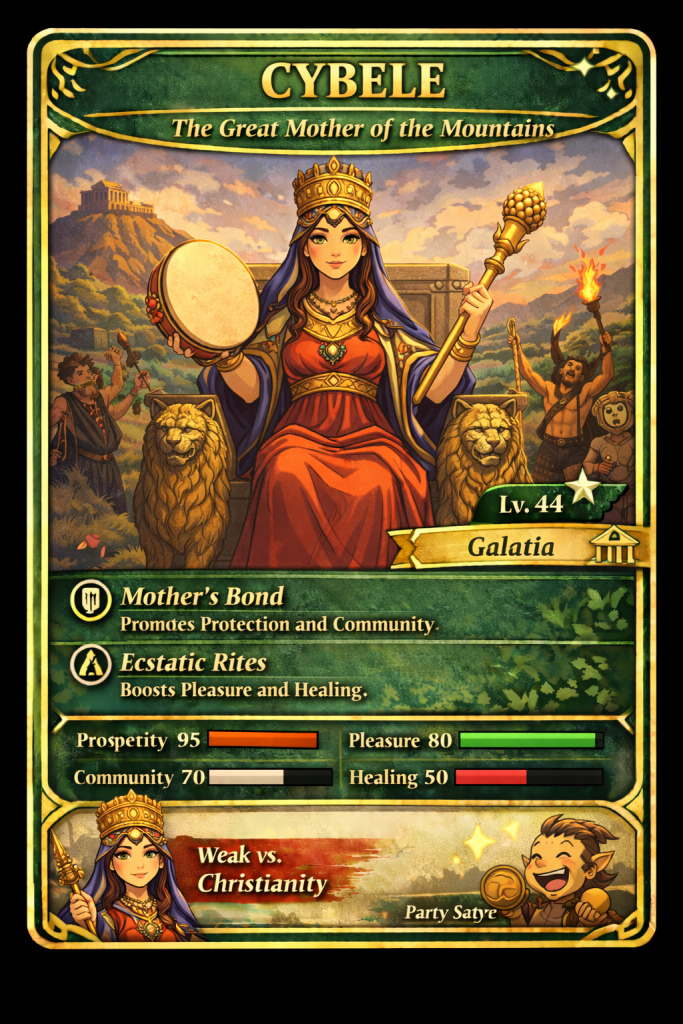
Cybele Romémon card
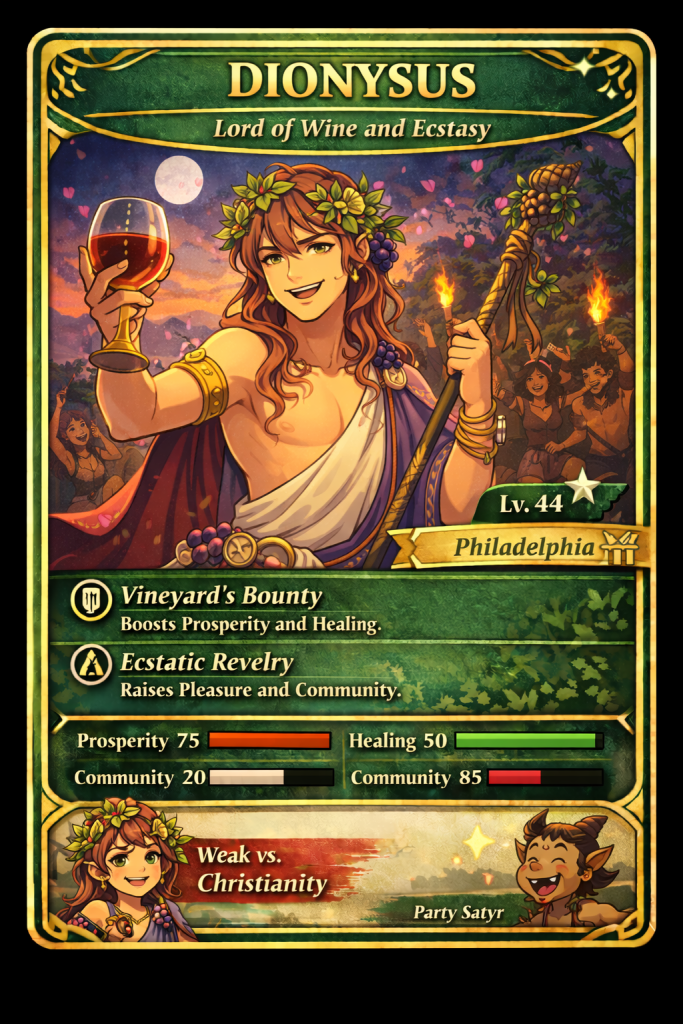
Dionysus Romémon card
Aphrodite Romémon card
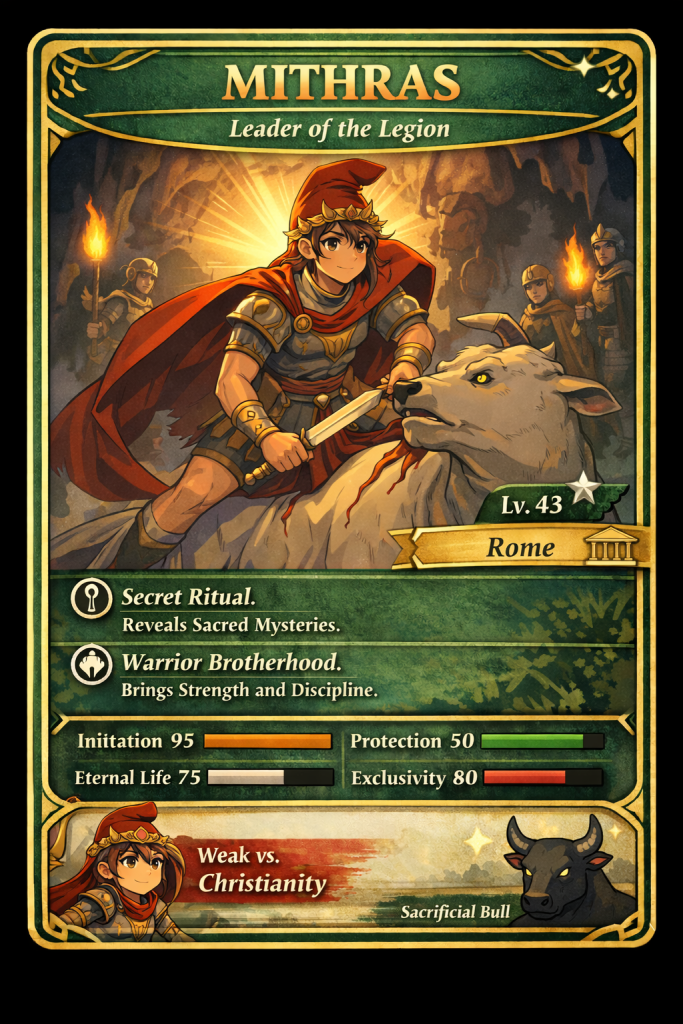
Mithras Romémon card
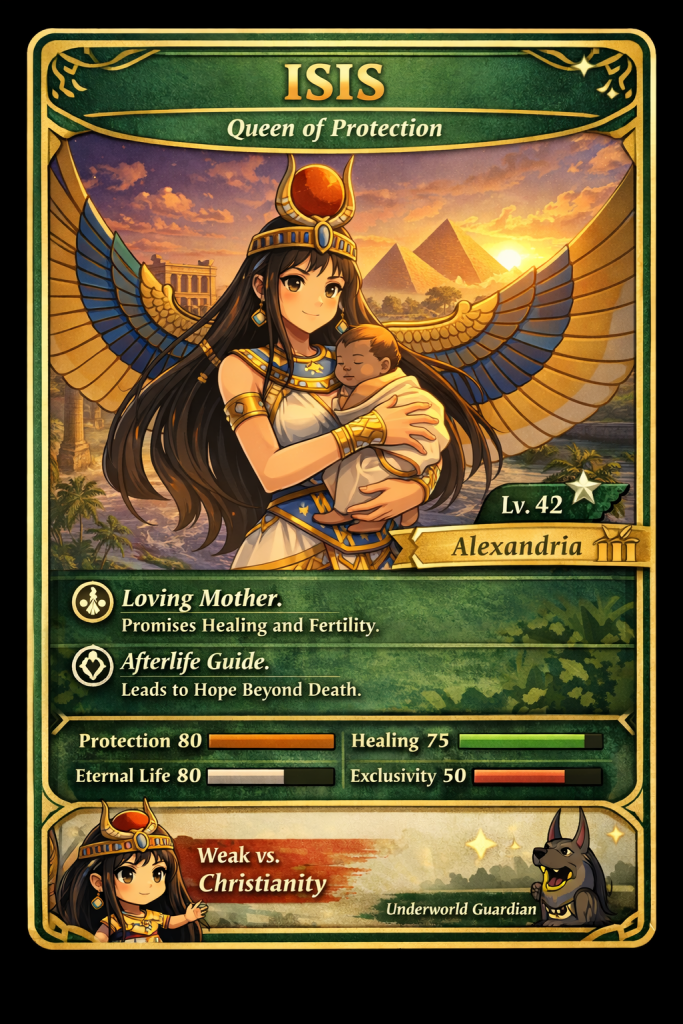
Isis Romémon card

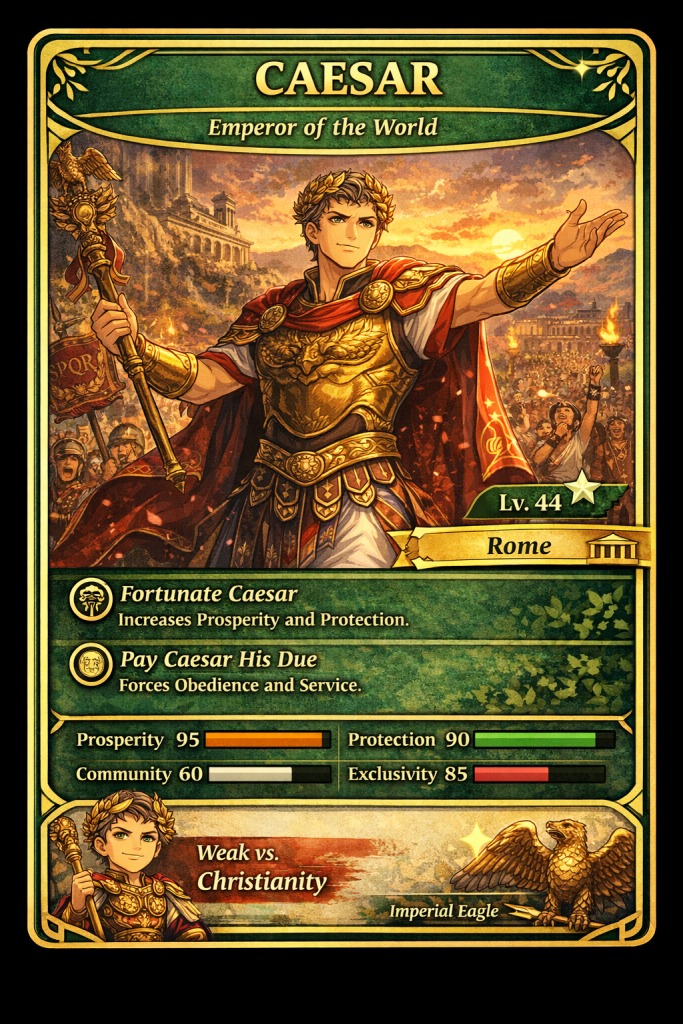
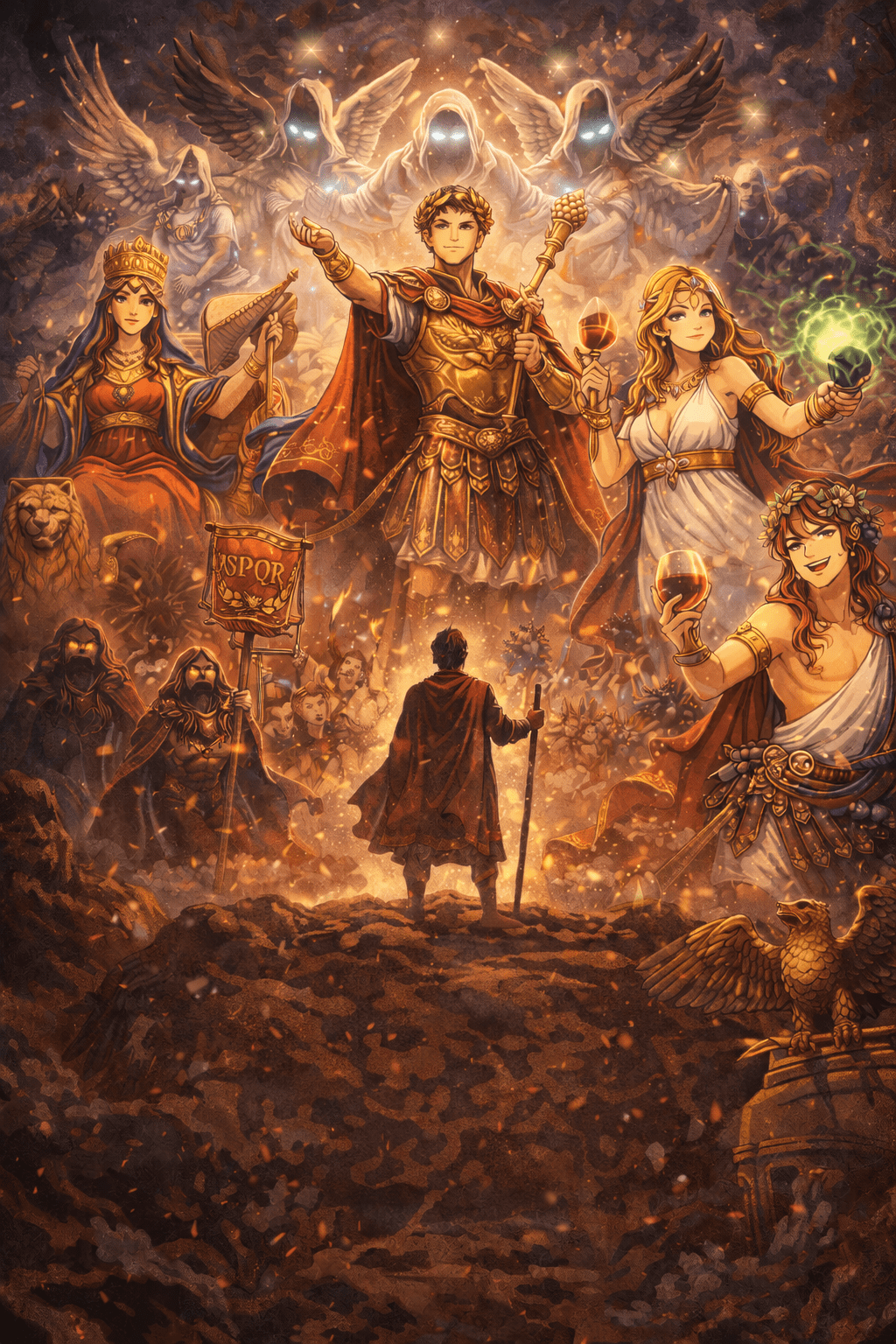
Rome tolerated nearly all of them. You could add one more god to the shelf. You could worship Artemis and Dionysus and Isis and Caesar all at once if you wished. Religion in the Roman world was often less like joining an exclusive club and more like building a custom deck of cards.

Cesar Romémon card

Christianity entered the Roman world making an outrageous and inconvenient claim: there is one Lord, and He is not merely another option among the others. Jesus is not a local deity for Judea. He is Lord over every city, every nation, every ruler, every temple, every spirit, every power, and every god.

That was why Christianity was so disruptive. The Roman Empire could tolerate one more god. It could not tolerate a God who demanded the place of all the others. Unlike the other idols, you couldn’t just collect Christ. He was game over for these powerful idols that have vanished from human experience.

Catch me?

Dark Side of The Moon circa 2026: Incredible Doubt and Credible Evidence

{First Draft, still in review}

In April 2026, 50 years after the Apollo missions, Artemis II launched 4 human astronauts towards the moon once again. I suppose the “generational mood” is less excited about this than the original Apollo missions, at time when national unity around this great accomplishment made it the most important historical event of the time. In our own era, while the enthusiasm was high for those that follow science and technology, much of the news cycled through the war in Iran, massive leaps in AI, and fractured politics. In the coming days, they will document with unprecedented detail the “dark” side of the moon (the real one, that is always facing away from the earth, not this one). I can’t wait!

I live in Huntsville Alabama, the “Rocket City,” home to engineers, technologists, contractors, and leaders that helped shape this mission from its conception. I went through leadership classes shoulder to shoulder with friends from NASA who fought the budget and technical battles to keep this mission alive in spite of the political mess of our time. Many of my coworkers, neighbors, and friends worked quietly on Artemis before the general public knew anything about it. And even so, within days of the launch, the conspiracy theories about faking the moon landing were back again, this time click-baiting to drive some social media revenue I suppose. I was in the computer graphics industry long before people credibly believed in CGI to fake the moon landing, which was far too complicated for the 1960’s sound stage tech; there is a great video that describes the lighting issues and how we finally got the technology to replicate the famous photos (I remember as a young software developer watching the original graphics product launch video, but could not find it… you know the kind of black-turtleneck product launch hype sessions). I had thought that when MythBusters did their show on the moon landing that would be the end of it. How can people dismiss the reality when a conspiracy of that size is nearly impossible?

In may sound risky, but I will go ahead and say it. Here goes. In spite of the incredible claim, that I cannot easily prove with first person evidence:

I believe that mankind has been to the moon.

Artemis did not spring into existence in a single moment. Fifteen years before launch, small teams at NASA and its contractors were building Artemis on the remnants of earlier programs (Apollo, SLS, Constellation, International Space Station, and more). The Space Program in Huntsville is almost a religion… almost. Then came the focused growth for another moon-shot: engineers in Huntsville, software teams in Houston, manufacturing in Louisiana, testing in Florida, suppliers across dozens of states, and international partners abroad. We all knew it was a necessary step towards an eventual trip to Mars, this time we are going to the Moon for a much longer visit. Eventually, by the time the public began to notice Artemis, tens of thousands of people had already touched the project. When we got to launch day, well over 100,000 people had participated in some significant way.

To believe Artemis is a hoax, one must believe that an army of ordinary people maintained a perfect deception for more than a decade. Engineers, welders, accountants, military personnel, managers, astronauts, suppliers, and foreign observers would all have to remain silent. No serious confession. No credible collapse. No leak sufficient to expose the fraud.

It is an incredible event, to be sure. What an interesting word: incredible. The word “incredible” is pure irony. Its Latin root, credibilis, means “worthy of belief,” while the prefix [in] ordinarily negates it: something incredible should mean “not credible,” something beyond belief in the sense of unbelievable or implausible. Yet over time the word acquired a second, almost opposite meaning. We now call something “incredible” not when it is false, but when it is so extraordinary, so astonishing, that ordinary categories seem inadequate. An incredible achievement is not one lacking evidence; it is one whose greatness strains our ability to believe it. The Moon landing was incredible in precisely this sense.

So also is the resurrection incredible. This past Sunday, while the astronauts were propelling towards the moon, nearly a third of the humans on Earth celebrated another incredible event recorded as having occurred 2 thousand years ago. Can this kind of faith be credible? The difficulty is that we often confuse “hard to believe” with “not worthy of belief.” But the greatest events in history are often both: beyond what we expected, yet supported by evidence that compels us to reckon with them.

The greater the number of people involved, the less plausible the conspiracy becomes. Let’s be engineers about it and build a table, shall we? Imagine the number of scientists, leaders, engineers, and analysts involved in Artemis that would need to be involved to make a conspiracy work.

Click to Expand [Table of Artemis Program Involvement from T minus 15 years until launch]
Relative YearCalendar YearMajor Artemis PhaseWhat Was HappeningApprox. People Involved*
T-15y2011Post-Constellation TransitionNASA salvages the core elements of the canceled Constellation program—Orion and the early Space Launch System concepts—into a new deep-space architecture. Small internal NASA teams and a few major contractors continue work quietly.2,000–3,000
T-14y2012Exploration Mission-1 DefinedNASA formally outlines what would later become Artemis I (then EM-1). Early design work begins on Orion, SLS, and mission architecture.3,000–5,000
T-13y2013Orion Service Module / InternationalizationNASA and ESA agree to develop the European Service Module. Orion, SLS, and supporting systems begin to grow into a broader international program.5,000–7,000
T-12y2014Hardware Fabrication BeginsConstruction begins on major SLS hardware at Michoud and Marshall. Early Exploration Ground Systems work starts at Kennedy Space Center.8,000–10,000
T-11y2015Major Contractor Ramp-UpBoeing, Lockheed Martin, Northrop Grumman, Aerojet Rocketdyne, Jacobs, and dozens of subcontractors expand staffing. Test articles, software, avionics, and facilities development accelerate.12,000–15,000
T-10y2016Integrated Program GrowthSLS, Orion, and ground systems become a national industrial effort. Huntsville, Houston, Florida, New Orleans, Utah, Colorado, and California are all deeply engaged, though most Americans remain unaware of the scale.20,000–25,000
T-9y2017Artemis Vision RevivedThe lunar return mission is revived and refocused under the new administration. NASA is directed back toward the Moon, building upon the years of prior work already underway.  25,000–35,000
T-8y2018“Artemis” Takes ShapeThe Artemis name and long-term mission architecture emerge publicly. Additional contractors, suppliers, universities, and support organizations are brought into the effort.35,000–50,000
T-7y2019Accelerated Lunar Landing GoalNASA announces the initial Artemis I / II / III sequence and an aggressive lunar return schedule. Workforce expands dramatically as development, testing, and launch preparation intensify.  50,000–70,000
T-6y2020Pandemic and Distributed DevelopmentCOVID slows schedules but does not stop the program. Thousands continue working across NASA centers, factories, suppliers, software teams, and mission operations.60,000–80,000
T-5y2021Lunar Lander and Artemis ExpansionNASA selects commercial lunar lander partners, especially SpaceX, while Artemis broadens beyond SLS and Orion into a full Moon-to-Mars ecosystem.  80,000–100,000
T-4y2022Artemis I Launch Preparation and FlightFinal integration, testing, launch operations, and mission support peak around Artemis I. Hundreds of companies and tens of thousands of people are now involved directly or indirectly. Artemis I launches successfully in November 2022.  100,000–120,000
T-3y2023Artemis II Crew and Long-Lead ProductionNASA names the Artemis II crew and begins full preparation for the first crewed lunar mission. Production of later mission hardware continues simultaneously.  110,000–130,000
T-2y2024Final Testing and Launch ReadinessOrion, SLS, ground systems, software, launch infrastructure, and crew procedures are tested repeatedly. Exploration Ground Systems alone receives billions in support and involves thousands of workers.  120,000–140,000
T-1y2025Integrated Countdown YearThe public begins to notice Artemis II, but by now the work has already involved over a decade of effort. Launch rehearsals, crew training, mission simulations, and final hardware integration occur.130,000–150,000
T-02026Artemis II LaunchArtemis II launches after fifteen years of development rooted in even earlier Constellation-era work. Tens of thousands of people directly support the mission, while the broader industrial base reaches into the hundreds of thousands.  150,000+

*These estimates are intended to illustrate the growing scale of the program, including NASA civil servants, major aerospace contractors, subcontractors, suppliers, software teams, university researchers, military support, international partners, and ground operations personnel. By Artemis II, the true number of people touched by the effort likely approaches the scale of Apollo, which at its peak involved over 400,000 people nationwide.


You know, I walked with engineers throughout Huntsville that were talking about the legacy space program vs the new Artemis program and was tracking doubt as well. In fact, one of my fellow Huntsvillans, Destin Sandlin from Smarter Every Day, gave a “talky-talk” for the local space folks about Artemis a couple of years ago; this was well before the main population really knew about the program but still very far into the engineering phases when most of the data was available (and thousands of people had their careers invested into the program). This is what people who really care about getting the truth do, instead of creating conspiracy theories to discredit people who know, they work to dig into the data and understand. Researching doubts is critically important to getting to the truth.

That same principle applies, perhaps even more strongly, to Easter. Matthew records a curious sentence, one of the most vulnerable and honest statements in all of recorded history, that after the resurrection it was not just bliss and obedience. There was serious doubt about not only what had just happened but how to deal with the ramifications of this new experience:

“And when they saw him they worshiped him, but some doubted.” — Matthew 28:17

Think about Huntsville and Artemis much like Jerusalem was for the early followers of Christ; these were people that knew what was going on before the rest of the world was involved. We have all heard about “doubting Thomas” yet let’s be honest, everyone was really concerned about how to mentally process what they witnessed. He was just bold enough to say what everyone else in the room was thinking. From that group of disempowered and scattered followers of a guy that just got capital punishment, disenfranchised by the Jerusalem establishment and having no possibility of taking on Rome, you have a movement that literally reshaped the known world. So what does it look like to have converted doubters across the entire Roman Empire such that it became the dominant worldview? Let’s build another table!

Click to Expand [Table of the Spread of Christianity from Crucifixion until the Publication]
YearRelative DateMajor Event / PhaseGeographic ScopeApproximate Size of the Church**
AD 30T+0yResurrection, Ascension, Pentecost. About 120 disciples gathered in Jerusalem before Pentecost.JerusalemAbout 500
AD 30T+0yPentecost: about 3,000 baptized after Peter’s sermon. The church begins meeting publicly and house-to-house.Jerusalem3,000–3,500
AD 31T+1yContinued growth in Jerusalem; Acts records the number of men alone rising to about 5,000. Including women and families, the movement is substantially larger.Jerusalem and Judea8,000–12,000
AD 33T+3yStephen is martyred. Persecution scatters believers into Judea and Samaria. Philip preaches in Samaria and to the Ethiopian official.Judea, Samaria, Gaza road10,000–15,000
AD 34T+4ySaul’s conversion. Small Christian communities now exist outside Jerusalem in Damascus and nearby regions.Jerusalem, Damascus, Syria12,000–18,000
AD 37T+7yPeter visits Lydda, Joppa, and Caesarea. Cornelius becomes the first major Gentile convert. The church begins to expand beyond Judaism.Judea, Caesarea, coastal Palestine15,000–20,000
AD 40T+10yAntioch becomes a major center. Followers of Jesus are first called “Christians.” Missionary work now reaches Greek-speaking Gentiles.Syria, Antioch, Cyprus20,000–30,000
AD 46T+16yPaul’s first missionary journey with Barnabas. Churches established in Cyprus and southern Asia Minor.Cyprus, Galatia, Asia Minor30,000–40,000
AD 49T+19yJerusalem Council resolves that Gentile converts need not become Jews. This dramatically accelerates expansion.Jerusalem, Antioch, Asia Minor40,000–50,000
AD 50T+20yPaul’s second missionary journey. Churches planted in Philippi, Thessalonica, Berea, Corinth, and elsewhere in Greece.Macedonia and Greece50,000–70,000
AD 53T+23yPaul’s third missionary journey. Ephesus becomes a major hub; Acts says “all Asia” heard the word through the Ephesian ministry.Asia Minor, Greece, Aegean world70,000–90,000
AD 57T+27yPaul returns to Jerusalem and is arrested. By now churches exist in most major eastern cities of the Roman Empire.Judea, Syria, Asia Minor, Greece, Rome90,000–120,000
AD 60T+30yPaul arrives in Rome under house arrest. Christianity is now present in Rome, Egypt, Syria, Asia Minor, Greece, and perhaps farther east.Much of the Roman Empire100,000–150,000
AD 62T+32yBook of Acts ends with Paul preaching freely in Rome. The church is still illegal and often obscure, yet it has spread across the empire in a single generation.Empire-wide urban network120,000–180,000
AD 64T+34yNeronian persecution begins after the Great Fire of Rome. Peter and Paul are believed to be executed shortly afterward.Rome and beyond150,000–200,000

**These figures are necessarily approximate, but they illustrate the same pattern as the Artemis program: long before the average Roman citizen knew much about Christianity, thousands of people across cities, cultures, trade routes, and languages had already become part of the movement.


By the time the book of Acts is written, Christianity is no longer a rumor in Jerusalem. It has become an interconnected network of churches stretching from Jerusalem to Rome, with hundreds of local congregations, numerous written letters already circulating, and many thousands of eyewitness-linked believers across the empire. Estimates by historians such as Rodney Stark and Bart Ehrman generally place the Christian population around 100,000–150,000 by AD 60, growing to perhaps 150,000–200,000 by the mid-60s.

That is not the sort of line one invents in a legend. A fabricated story removes uncertainty. It makes every witness immediately certain, brave, and triumphant. The Gospels show frightened disciples, confused women, skeptical followers, a denying Peter, a doubting Thomas, and even group that doubted and needed to double down to check their beliefs against the new reality.

The Bible is not embarrassed by doubt. It simply refuses to make doubt the final word. In fact, the very existence of the New Testament is a marvel from the perspective of ancient literature. Consider that most major events of human history have been attested to by only a handful of people. Don’t believe me? How about yet another table (you probably are getting a data oriented vibe here, right?)

Click to Expand [Documentation of Ancient Events by Eyewitnesses]
EventPrincipal AuthorsApproximate Date of Writing^Distance from Event
Peloponnesian WarThucydidesBegan writing during the war, c. 431-400 BCT+0-30y
Peloponnesian WarXenophonc. 390-360 BCT+14-44y
Alexander the Great’s conquestsCallisthenesDuring Alexander’s campaigns, c. 330s BC (lost)T+0-5y
Alexander the Great’s conquestsArrianc. AD 110-130T+440-460y
Alexander the Great’s conquestsPlutarchc. AD 100-120T+420-440y
Julius Caesar’s Gallic WarsJulius Caesarc. 52-51 BCT+0-6y
Assassination of Julius CaesarNicolaus of Damascusc. 20 BC-AD 10T+35-55y
Assassination of Julius CaesarSuetoniusc. AD 120T+160y
Assassination of Julius CaesarPlutarchc. AD 100-120T+145-165y
Eruption of Mount Vesuvius in 79 ADPliny the Youngerc. AD 104-107T+25-28y
Fall of JerusalemJosephusc. AD 75-79T+5-9y
Eyewitness of JesusPaul the ApostleEarliest letters c. AD 48-67T+15-37y
Eyewitness of JesusPeter the ApostleLetters written prior to death c. AD 50-64T+17-34y
Eyewitness of JesusJames the Brother of Jesusc. AD 45-48T+12-18y
Eyewitness of JesusJude the Brother of Jesusc. AD 60-90T+30-60y
Eyewitness of JesusMark the Student of Peterc. AD 50-65T+20-35y
Eyewitness of JesusMatthew the Apostlec. AD 55-65T+25-35y
Eyewitness of JesusLuke the Evangelist, Student of Paul c. AD 60-62T+30-32y
Eyewitness of JesusJohn the Apostlec. AD 85-95T+55-65y

^The comparison is striking: for many major events of antiquity, historians consider sources written decades or even centuries later to be entirely respectable. By contrast, the central events of Christianity were documented by multiple authors within the lifetime of eyewitnesses, many within 15–35 years of the resurrection, while hostile witnesses and contemporaries were still alive.  


I obviously summarized only a handful of the many events and writings of ancient history here, wanting to focus on a couple of major personalities and events that we have strong confidence about (e.g. Alexander the Great and Julius Caesar). Let’s start by saying that the person of Jesus is in no dispute; it still makes magazines sell at the checkout counter of the grocery store (yes, they still have those) and it still makes click-bait on social media, but no serious scholar debates the existence of the person. When it comes to the events of New Testament, not just the “mythical figure”, it has been so well analyzed we can even identify specific passages that may be in error! We do not need to question even the individual sayings of Jesus because we can focus in on a very specific phrase to question, much less the whole individual letter or book. I gave a presentation to a group of college students in 2014 that walked through the literary evidence of the cannon and an example of this kind of attention to detail… in this case a disputed passage of Scripture. I suppose one of these days I will make it a blog post, but here are the slides from that presentation. The point is that even among the best-documented events of antiquity, the norm is one principal eyewitness source. Two is unusual. Most of the major events (e.g. assassination of Caesar) are not even made by eyewitnesses but rather by some historian a full generation or more later after the events occurred.

This makes the New Testament documentation record astounding! A network of six to eight interconnected authors writing within a generation is extraordinarily rare; unlike what you have in the New Testament with Matthew, John, Peter through Mark, Luke, Paul, James, Jude, and their named associates, most of the events of the ancient world are, by comparison, little more than hearsay. The resurrection was not proclaimed by one isolated man with a private vision. It is perhaps the most well documented event (prior to the invention of the printing press) in all of ancient history. It emerged in the very city where Jesus had been crucified only weeks before. The tomb was in a known location. The authorities were present. The hostile anti-witnesses were still alive.

However, there is another layer to the comparison. Artemis required thousands of people to build a spacecraft, but the largest risks to them were career or credibility. Christianity required thousands of people to embrace a scandal. The first Christians did not gain power, wealth, or comfort by proclaiming the resurrection. They did not simply hold those things at risk, they actually lost them. Lives were at stake for proclaiming “Jesus is Lord” (and, therefore, not Caesar). The whole point of the Roman persecution was to make the cost of Discipleship too extreme and to thus stamp out the movement. They had lots of experience doing exactly that, so the advent of Christianity is more than just documentation about a unique and incredible event, it is an anomaly of another kind entirely. The apostles were beaten, imprisoned, and eventually killed. Priests who believed in Christ lose their place in the temple. Merchants risked their businesses. Roman soldiers risked their lives. Public officials risked their standing. Families risked rejection. Christians in Rome eventually faced torture and execution.

If an engineer today knowingly lied about Artemis, he might lose his job or face a lawsuit. The first Christians, by contrast, faced prison, ruin, and death. Some men may die for a lie if they think it is true. But men do not willingly die for what they know to be false. It is one thing to believe a conspiracy, it is quite another to create one worth risking your life to convince others about.

The resurrection accounts are especially remarkable because they were written so early. Most events in the ancient world are known from one author writing decades or even centuries later. Alexander the Great is known chiefly through writers who lived more than four hundred years after him. Julius Caesar’s assassination is described largely by authors writing more than a century afterward. The resurrection is so very different.

Within fifteen to thirty years of the event, Paul was writing letters to churches throughout the empire. James, the brother of Jesus, wrote while many eyewitnesses were still alive. Matthew, Mark, Luke, and John all recorded the story within the lifetime of those who had seen these things. Peter’s testimony stood behind Mark. Luke carefully gathered eyewitness accounts. John wrote as one who had leaned upon Jesus Himself.

More striking still, these writers were not strangers to one another. They formed an interconnected network. They traveled together, suffered together, and sometimes wrote together. Paul named his secretaries and companions. Luke accompanied Paul. Mark worked with Peter. Silvanus assisted Peter. The authors were not scattered voices inventing isolated myths. They were a community of witnesses.

And what did they all say? It is best captured in a creed that they spoke to one another in the earliest days after the resurrection, before even the first letters were written, and captured in 1 Cor 15:3-8.

  • That the Old Testament Jewish Scriptures were prophetic of the events.
  • That Jesus was a human that was crucified and died.
  • That He was buried.
  • That He rose again.
  • That He appeared to many who were eyewitnesses.

The theology did not emerge slowly over centuries. It arrived with astonishing speed. Within weeks of the crucifixion, persecuted eyewitnesses were already proclaiming that Jesus was the risen Son of God. Within just a couple of years it had spread beyond Jerusalem and people all over Rome were worshiping Him, reciting creeds that still survive in Paul’s letters. Today there are modern tools that can provide “deep fakes” and so it helps to be a bit skeptical. Just remember, you cannot deep fake the past. Perhaps that is why God elected to create the explosion of literary proof and then build up the evidence over two thousand years by skeptical analysis (folks like me that did not take it at face value and did our research) about Jesus. If you saw it on TV, would you believe it any more than reading about it from history? While you are watching events of our lifetime unfold in space, beyond what you can touch or see with your own eyes, you are relying on technology and eyewitness accounts.

This is what makes the resurrection so difficult for some people to accept. The evidence is not weak, though thoughtful skepticism is warranted; however, the implications are enormous so it is worth doing some homework on your own.

Interested in Discussing More?

Click to Expand: [Discussion Outline for Theology Pub]

Theology Pub on Incredible Doubts and Credible Evidence

Let’s assume that you are going to grab coffee, lunch, or a drink after work with some friends who do not live under a rock and know about the Artemis mission. Would you talk to them about something like this? Here are some sample questions that you could use as conversation starters:

  • If you had lived in Jerusalem in AD 30, or at Cape Canaveral this week, what would it have taken to persuade you of incredible news? Do you really believe we put a man on the moon?
  • Why do people doubt extraordinary events even when evidence is abundant? Talk about the nature of personal skepticism and why it is important to fill in the gaps, to ask tough questions, and why doubt is not the same as disbelief.
  • What is the difference between healthy skepticism and determined unbelief? Talk about what makes the difference between acknowledging evidence and rejecting the implications of a belief.
  • Does the existence of doubt prove anything about the truth of an event? The whole process of learning requires us to ask questions and challenge assumptions, so doubt can be very healthy; however, having questions should not cause us to toss out the evidence that is available to us.

Discussion Points

1. The Scale of a Conspiracy

Talk about the need to maintain a consistent story if you are trying to fabricate an incredible event. What would the motivations be and who would benefit or be at risk from the conspiracy? A small lie can be maintained by one person, so we can see “snake oil salesman” type followings that quickly come and go. A larger lie perhaps by a handful, so we can see really impactful lies like Watergate happen but then collapse when just one person gets caught in the lie. However, what kind of scale would it take to create a conspiracy when thousands of people are involved? Talk about the likelihood of maintaining a deception when persecution collapses all the incentives for maintaining the conspiracy.

  • Artemis involved over a decade of work and more than 100,000 people. What did they risk for hiding anything that could have contributed to a potential mission success or failure? What if they had political pressure to “make a launch happen” even if they knew something would fail, could they all reasonably be kept quiet on launch day?
  • The early church grew from 120 believers to perhaps 100,000 across the Roman Empire in a generation. Talk about the risk to their lives and reputations for even entertaining the idea that a dead Jewish man was greater than Caesar.
  • Thousands claimed to know someone who had seen the risen Christ. Compare the evidence for belief in Jesus by the first century people who could talk to eyewitnesses with the first-hand videos of the launch of Artemis, the ability to travel to Huntsville and see where work was done, and the level of detail that is captured about these events. There is a lot of information to explore! Can anyone name an ancient event that is captured with that level of detail apart from the resurrection of Jesus?

Which is more difficult to believe: that Christ rose from the dead, or that thousands of people knowingly maintained the same lie while suffering for it?

2. Extraordinary Events Produce Extraordinary Doubt

The Moon landing and the resurrection share something in common: both are so extraordinary that they offend our instincts. You cannot prove the moon landing without help from scientists and engineers that (if you believe it to be a conspiracy) would have also been complicit in making up the story to begin with. However, the implications are very different: if we landed on the moon then, well, so what? However, the resurrection challenges the belief that death is final and the universe is only material, so the stakes are much higher for an individual confession.

Why is it often easier to believe a the evidence for Christianity is a vast conspiracy than an uncomfortable truth?

3. The Nature of the Witnesses

The first witnesses to the resurrection were not gullible enthusiasts, they risked everything to proclaim what they saw. They were also honest about their doubts and scripture records some inconvenience in any formation of hero stories:

  • Thomas doubted.
  • Peter denied Christ.
  • The women were not initially believed.
  • The disciples hid in fear and were heavily persecuted.

These are not the ingredients of propaganda. They are the marks of honest testimony.

What makes a witness credible? Can a good “cross examination” create fear and doubt? If so (and the answer is most certainly yes) then what explanation do we have that Rome simply could not stomp out this obscure belief in the resurrection of Jesus?

4. The Cost of Belief

Beyond the initial eyewitnesses, something else astonishing happened: belief in Christ spread throughout the entire Roman world. Something in the evidence, message, and transformation of their lives caused a massive group of people to accept something that was scorned by Rome and could not be silenced from a place that was not even their own home town. It was one thing for people in Huntsville to believe in the moon landing, we have rockets to spare (seriously, you can even see one at the rest stop nearby). However, it spread within a single generation far beyond the city of origin to every part of the Roman Empire. much too fast for a myth because you could still go see and interview the eyewitnesses. Even so, proclamation of believe had crushing side effects. The first Christians gained almost nothing from proclaiming Christ and lost almost everything.

  • Apostles were imprisoned and killed.
  • Business owners lost trade, especially when it was partially dependent on local idols.
  • Religious folks, especially priests, lost status with their family and community.
  • Roman officials risked careers, soldiers especially were among the early Christian converts after they had been persecutors!

Men will sometimes die for a lie they believe to be true. But they do not die for a lie they know to be false.

What possible motive could explain the persistence of the first Christians if they knew the resurrection never happened?

Progressive Christian Citizenship – President’s Day 2025

Have you noticed, I wonder, that there is a cultural tendency to make civil discourse uncivilized? All of us, from time to time, fall into the trap of pointing fingers at someone guilty of the same sin we fail to see in ourselves when we reflect in pride at our own correctness. Perhaps some wisdom from the past may be helpful, a voice that has been claimed by every side in a world that bifurcates each message into “us” and “them”. There are many to choose from, so picking one on President’s Day I thought it appropriate to engage someone claimed by Progressives, Conservatives, and everyone in between.

Christian Citizenship: The Call to Strength and Virtue

On this President’s Day, as we reflect on the legacy of leadership in America, it is fitting to turn our attention to a man whose vision for citizenship was inseparable from moral duty—Theodore Roosevelt. His essay, Christian Citizenship, found in The Strenuous Life, is not merely a relic of political thought but a clarion call to every generation that seeks to reconcile faith with civic responsibility.

I think many questioned whether he was committed to his Christian beliefs. We may also wonder what the patriarch of the Progressive movement might have to say about a nation that seems in flux on “conservative principles” and “Christian Nationalism” (by the way, I think that is an entirely different phrase than Christian Citizenship, FWIW).

Perhaps we should just allow him to speak for himself on the subject:

The Decalogue and the Golden Rule must stand as the foundation of every successful effort to better either our social or our political life. “Fear the Lord and walk in his ways” and “Love thy neighbor as thyself”—when we practice these two precepts, the reign of social and civic righteousness will be close at hand. Christianity teaches not only that each of us must so live as to save his own soul, but that each must also strive to do his whole duty by his neighbor. We can not live up to these teachings as we should; for in the presence of infinite might and infinite wisdom, the strength of the strongest man is but weakness, and the keenest of mortal eyes see but dimly. But each of us can at least strive, as light and strength are given him, toward the ideal. Effort along any one line will not suffice. We must not only be good, but strong. We must not only be high-minded, but brave-hearted. We must think loftily, and we must also work hard. It is not written in the Holy Book that we must merely be harmless as doves. It is also written that we must be wise as serpents. Craft unaccompanied by conscience makes the crafty man a social wild beast who preys on the community and must be hunted out of it. Gentleness and sweetness unbacked by strength and high resolve are almost impotent for good.
The true Christian is the true citizen, lofty of purpose, resolute in endeavor, ready for a hero’s deeds, but never looking down on his task because it is cast in the day of small things; scornful of baseness, awake to his own duties as well as to his rights, following the higher law with reverence, and in this world doing all that in him lies, so that when death comes he may feel that mankind is in some degree better because he has lived.
– Teddy Roosevelt [CARNEGIE HALL, NEW YORK, DECEMBER 30, 1900]

From this quote, we should ask ourselves: can we each make life for others just a little better because we lived? What is progress, anyway, if not improvement on lessons of the past, mistakes and successes, individual and collective. That’s a topic worth discussing.


Theology Pub Host Preparation

Expand each section below (by clicking the arrow) to read a deep dive in preparation for hosting a Theology Pub discussion. Remember, this is not just intellectual, it is also personal – any given topic is likely to touch on a nerve in someone’s personal life. Click on this first arrow to see an example.

All Application is Personal Application

Example: A discussion thread may lead to big government vs small government, which is not inherently a theological topic, but get there because of Teddy Roosevelt’s quote:

While on the one hand it has become evident that under the conditions of modern life we can not allow an unlimited individualism which may work harm to the community, it is no less evident that the sphere of the State’s action should be extended very cautiously, and so far as possible only where it will not crush out healthy individual initiative.

This could easily spur a discussion on the balance of what should be done by State action versus what should be done by private organizations – yet what about cases where actions larger than a private organization are required, such as in laws for handicapped individuals? Remember, this is not just hypothetical for people who are reliant on the state not by a lack of healthy individual initiative but because they are truly reliant on others. Always remember it is personal to someone.


The idea of hosting a Theology Pub discussion is to first prepare yourself as a discussion leader in the topic at hand. This may involve some prep on the subject for you; however, others should just feel comfortable showing up unprepared, just as any item from today’s current headlines can easily make this topic relevant on the spur of the moment! The goal is to just have a dialogue – not to give folks that come to join you any homework or read aheads – preparation is your job. So, the following sections are provided to those who wish to dig deeper on this topic and prepare themselves. When you are ready, just invite others for chat, perhaps with just the quote from Teddy Roosevelt or something that stood out from a recent headline; a desire to grab a drink and chat with some friends is often rewarded.

This first section provides an article to encourage some reflection on the subject…

Progressive Christian Citizenship: Reflection on Theodore Roosevelt’s Essay

The True Citizen: Strong, High-Minded, and Brave-Hearted

Roosevelt’s argument is strikingly simple yet profound: The best citizen is also the best Christian. He warns against the twin evils of excessive individualism and overreaching state control, advocating instead for a society where individuals embrace personal responsibility while also supporting one another. Charity is necessary, but reliance on the state at the expense of self-respect is ruinous.

One cannot read his words without recognizing their relevance today. “To break the Tenth Commandment is no more moral now than it has been for the past thirty centuries,” he wrote, condemning envy and class warfare just as strongly as he opposed greed. Roosevelt saw moral decay as the greatest enemy of both the Republic and the Church. The true Christian citizen is not simply pious but industrious, honest, and courageous in standing against injustice.

The Pitfalls of Modern “Progress” and Religious Division

It is interesting that Roosevelt is often claimed by both the political left and right. Progressives may laud his reformist spirit, but he would hardly recognize today’s redefinition of progress—a concept now often detached from personal virtue and moral restraint. Conservatives may applaud his emphasis on duty and family, yet they must also reckon with his belief that wealth and power are dangerous if detached from righteousness.

Today, the term “Christian” is similarly stretched and reinterpreted by various factions. Some wield it as a weapon of exclusion, while others dilute it to the point of meaninglessness. Roosevelt’s words challenge both approaches: “We ask that these Associations, and the men and women who take part in them, practice the Christian doctrines which are preached from every true pulpit.” True Christianity, for him, was not a tribal identity but a call to moral excellence.

A Call to Action: Citizenship as Discipleship

Roosevelt’s challenge is clear: We are not merely called to believe; we are called to act. The Bible does not tell us to be harmless doves only, but also wise serpents. Strength and righteousness are inseparable. A nation cannot survive if its people lack either.

What, then, is the Christian response to the civic strife of our time? It is neither passive retreat nor reckless zeal. It is the steady work of integrity in family life, fairness in public discourse, and a commitment to moral action without hatred. Roosevelt warned against those who “try to solve the great problems that confront us by an appeal to anger and passion.” His words could have been spoken yesterday.

The Measure of a Life Well Lived

Roosevelt closes with words worth committing to heart:

“The true Christian is the true citizen, lofty of purpose, resolute in endeavor, ready for a hero’s deeds, but never looking down on his task because it is cast in the day of small things.”

A Christian citizen does not wait for grand moments of history to act. He serves in the quiet, daily duties of honesty, sacrifice, and love of neighbor. When death comes, Roosevelt says, he should be able to say, “Mankind is in some degree better because he has lived.”

If we are to honor the spirit of President’s Day, let it not be with mere nostalgia for past greatness, but with a resolve to embody the principles that made such greatness possible.


The next section provides an outline for how you might structure a conversation on this topic with a group of friends at a pub or coffee shop to encourage a civil dialogue…
Pro Tip: Let the discussion be open ended, honor everyone’s time by keeping a pace that ends in open discussion without division or strife. You do not have to wrap up loose ends, they make great points for future discussions.

Theology Pub: The Progressive Christian Citizen’s Duty and Discipleship in Public
1 Hour Conversation Outline

Introduction (10 Minutes): The Weight of Citizenship

Start a 10 minute conversation with something along the lines of:

It is a curious thing that the modern world has drawn a sharp line between faith and public life, as though Christ’s injunction to love one’s neighbor did not extend to policies, governance, or civic engagement. Theodore Roosevelt, in his essay Christian Citizenship, saw no such division. He argued that to be a good citizen was, at its heart, to be a good Christian—one who pursues righteousness, justice, and the common good with strength and wisdom.

Christian citizenship is not a passive title, nor a mere legal status. It is an active vocation, demanding more than personal piety or political partisanship. It calls for the full engagement of heart, mind, and soul in the shaping of society. It means defending truth, exercising virtue, and resisting both the corruption of greed and the folly of envy. In short, it requires the very thing Christ taught His disciples: courage wrapped in wisdom, compassion strengthened by conviction.

Tonight, let us examine what it means to be a Christian citizen, where Scripture and civic duty intertwine, and how Roosevelt’s insights remain startlingly relevant in our own divided times.

Feel free to add in additional thoughts from your reading and research – this is your discussion, so make it a personal dialogue not just something you read verbatim.

Worldview Discussion (20 Minutes)

1. The False Divide: Faith and Public Life

• Many modern thinkers advocate a secular public square, where religion is kept private. Is this a biblical view?

• How do we reconcile Christ’s call to serve “the least of these” (Matthew 25:40) with the civic responsibility to uphold justice and order?

• Can morality be legislated? If so, where is the line between righteous governance and theocracy?

2. Virtue Over Ideology

• Roosevelt warned against those who inflame “anger and passion” in public discourse. Do we see this today, and how should Christians respond?

• What virtues should define Christian political engagement? Meekness, justice, wisdom? How do these balance?

• How do we avoid the twin pitfalls of political apathy and idolatry?

3. Charity vs. Responsibility

• Roosevelt argued that charity without self-respect leads to dependence, but unchecked individualism leads to neglect. How do Christians navigate this balance?

• How does the biblical principle of stewardship (Luke 16:10) apply to governance and economic policy?

• Are modern welfare and social justice movements in alignment with biblical charity?

Christian Worldview Redirect (20 Minutes)

1. The Biblical Mandate for Civic Engagement

• Scripture does not call believers to retreat from society but to be “salt and light” (Matthew 5:13-16).

• The Old Testament prophets held rulers accountable—how does this apply to modern Christians?

• Romans 13 commands obedience to governing authorities, yet Acts 5:29 commands obedience to God over man. When do Christians resist?

2. Strength and Humility in Political Action

• Christ told His followers to be “wise as serpents and harmless as doves” (Matthew 10:16). What does this mean for modern civic engagement?

• How do we fight injustice without becoming unjust?

• How do we ensure our politics are shaped by our faith rather than the reverse?

3. A Call to Noble Citizenship

• Roosevelt wrote, “The true Christian is the true citizen, lofty of purpose, resolute in endeavor, ready for a hero’s deeds.”

• What small actions can we take daily to live as Christian citizens?

• How does our heavenly citizenship (Philippians 3:20) shape our earthly duties?

Closing Thought (10 Minutes)

Roosevelt’s vision of Christian citizenship was not about political party or national pride but about character. His words echo the wisdom of Scripture: we must not only be good, but strong; not only high-minded, but brave-hearted.

If Christian citizenship is indeed discipleship in the public square, then we cannot afford complacency. We must engage with wisdom, act with righteousness, and speak with both truth and grace.

The question remains: Will history say that the world was better because we lived as Christian citizens?


This final section provides you some worldview considerations and an alternative perspective you should consider when engaged in a dialogue where not everyone shares a Christian viewpoint.

You should really take the time to think through the potential arguments to a Christian Worldview. This is good for your faith, not just for the discussion at hand. Furthermore, you are well served in keeping this as a dialogue, and not a debate, thus being ready to receive an argument with a cool head and thoughtful response is important when someone shares their heart and head with you – at the public place where you invited them to join you to talk about a hot topic!

Alternative Worldview Considerations

Theological Considerations in Citizenship and Governance: A Worldview Analysis

The relationship between faith and governance is one of the oldest and most contentious issues in human history. From the theocratic rule of ancient Israel to the Christian debates over monarchy and democracy, believers have long wrestled with how—or whether—faith should shape civic life. Today, the conversation continues, often reduced to binary arguments between secularism and theocracy, progressivism and conservatism, individual freedom and communal responsibility.

But Christianity is neither a political ideology nor a mere cultural tradition. It is a faith that speaks to the very nature of human beings, morality, and justice. The question, then, is not whether theology should influence governance, but how it should do so rightly.

1. The Secularist View: The Absence of Theology in Governance

Modern secularism argues that governance should be devoid of religious influence. This view is rooted in Enlightenment thought, which sought to establish reason as the primary source of authority. Under this model:

Religion is seen as personal, not public. Faith is considered a private matter with no bearing on legislation or civic duty.

Moral relativism often prevails. Laws are based on societal consensus rather than objective moral principles.

The state replaces religious structures. Government programs take the place of traditional religious institutions in areas like charity, education, and ethical formation.

Critics of this view argue that it is self-contradictory. Every law is based on some moral framework; the question is whose morality is being enforced. Secularism, despite its claims to neutrality, often imposes its own ethical system while excluding others.

2. The Theocratic View: Governance as an Extension of Divine Law

At the opposite extreme is the theocratic model, where religious authority and civil government are indistinguishable. This view has historically manifested in:

Theocratic states like ancient Israel, medieval Christendom, and Islamic caliphates. Here, religious leaders wield governmental power, and civil law is directly derived from sacred texts.

Moral absolutism enforced by the state. Sin is treated as a crime, and civil penalties are prescribed for offenses against religious law.

While theocracy ensures that governance aligns with religious convictions, history has shown that it often leads to legalism, oppression, and human corruption distorting divine law. Even in ancient Israel, where God Himself was King, the people demanded a human monarch (1 Samuel 8), and the Old Testament is filled with the failures of kings and priests who abused their authority.

3. The Christian Worldview: A Kingdom Not of This World, Yet In It

The Christian perspective on governance is unique because it does not fall neatly into either secularism or theocracy. Christ declared, “My kingdom is not of this world” (John 18:36), yet He also taught that believers are to be “salt and light” in society (Matthew 5:13-16). This creates a tension: Christians are called to be engaged in earthly governance, but their ultimate allegiance is to a higher kingdom.

From a biblical perspective:

Government is ordained by God (Romans 13:1-7). Civil authorities are meant to restrain evil and promote justice, but they are not divine.

Believers are called to influence, not dominate. Joseph, Daniel, and Esther all served in pagan governments while remaining faithful to God.

The moral responsibility of a Disciple transcends political structures. Whether under democracy, monarchy, or empire, Christians must uphold justice, mercy, and humility (Micah 6:8).

This worldview avoids the errors of both secularism and theocracy. It affirms the necessity of moral governance while recognizing that human rulers are fallible. It acknowledges that laws can guide behavior, but only Christ transforms hearts.

4. Practical Considerations for Christian Citizenship

If governance is a tool rather than an idol, how should Christians engage in politics and citizenship today?

Vote and advocate wisely. Political involvement is not about partisan allegiance but about seeking policies that align with justice and biblical morality.

Reject both apathy and idolatry. Some Christians disengage from politics, assuming that “this world is not our home,” while others treat politics as though it can bring ultimate salvation. Both views are flawed.

Be agents of peace and righteousness. Christians should be known for their wisdom, integrity, and commitment to truth—never for fearmongering or partisanship (James 3:17).

Balance justice with mercy. Policies should not merely be punitive but should reflect God’s heart for both justice and restoration (Isaiah 1:17).

The Hitch: Perspective on Holy PoliticsWhen Faith Becomes a Means to Power

C.S. Lewis was once noted as having struggled with writing the Screwtape Letters because it was such an awkward perspective to make an evil mentor. However, I imagine that he would encourage us, nonetheless, to seriously consider what an atheist might say, even if not meaning to be an antagonist, at the table while we discourse at the pub. Perhaps our antagonist would say: “My dear Christian, if you wish to truly master the art of control, you must learn the great trick of pious politics. You see, it is quite simple to take the loftiest of ideals—faith, morality, righteousness—and twist them ever so slightly until they become the very instruments of ambition, division, and power. Therein lies the great trick of subjecting everyone else to piety while you are seeking power instead.”

Religion, therefore, happens to be an ideal instrument of subjugation to powerful people over those who mean simply to do well in society and before a God they believe is watching them. Why settle for a mere political movement when you can drape it in divine sanction? Why argue with opponents when you can declare them not just wrong, but heretical? Why be satisfied with reasoned governance when you can claim prophetic authority over legislation?

No, my friend, the truly cunning do not abolish religion from politics. They baptize politics in the name of religion and declare their kingdom to be the kingdom of God Himself. The results? History has been most generous in providing examples of just how splendidly this works. So what say you to the powerful who would use your desire for morality against you and others too weak to stand for themselves?

The Case For and Against Political Piety (As the Opponent of Christianity Might Argue)

Consider, if you will, the brilliance of a faith that weds itself to political power:

1. The Divine Right to Rule

• Kings, emperors, and even modern politicians have claimed God’s anointing, conveniently making opposition not just treason, but blasphemy.

• Why debate policy when you can proclaim that your platform is divinely inspired?

2. The Holy War Against the Other Side

• Whether in ancient theocracies or modern democracies, the easiest way to maintain power is to ensure that your opponents are not merely wrong but wicked.

• Frame every issue as a battle of light vs. darkness, and soon enough, the people will stop asking questions and start sharpening their swords.

3. Selective Morality for Political Gain

• Nothing strengthens a movement like claiming God’s favor while strategically ignoring the more inconvenient parts of faith—like humility, love, and justice.

• It is a most useful trick to emphasize personal sins in one’s enemies while excusing corruption and injustice in one’s own camp.

4. The Messiah Complex in Leadership

• Every era has its leaders who are not content to be mere politicians; they must be prophets, deliverers, even messiahs.

• If you wish to hold absolute power, let the people believe you are the fulfillment of God’s plan rather than merely a fallible human in a temporary office.

What a wonderful machine this is! Once in motion, it needs no external force to sustain it. A self-perpetuating cycle of religious fervor and political power, where the people will march, fight, and even die—not for truth, but for your truth.

The Christian Counterpoint: A Kingdom Not of This World

But alas, there remains one most inconvenient Man who shatters the entire scheme. He is, of course, the Christ who stood before Pilate and declared, “My kingdom is not of this world” (John 18:36).

How vexing! Instead of seizing power, He emptied Himself. Instead of condemning Rome, He warned that the greatest among men must be the servant of all. Instead of wielding political force, He allowed Himself to be executed by it.

And what did He say about those who seek to mix faith with power? “Render unto Caesar what is Caesar’s, and unto God what is God’s” (Mark 12:17). A most disastrous doctrine for those who wish to use His name to seize control.

For the true Christian, the danger is clear: when faith becomes a political tool, it ceases to be faith at all. It becomes idolatry, a hollow shell of religion serving an earthly master.

Final Redirect: The True Role of Faith in Public Life

Does this mean Christians should abandon politics entirely? By no means! Faith should shape one’s ethics, inspire justice, and inform governance—but never as a blunt instrument of power. The Christian citizen is called to be a servant, not a conqueror; a voice for truth, not a pawn of propaganda.

The Church thrives not when it wields power, but when it speaks truth to it. When faith becomes a weapon in the hands of politicians, it loses its salt and light, becoming nothing more than a banner under which men march to their own ambitions.

And so, dear reader, the question remains: Will your faith shape your politics, or will your politics shape your faith? The answer determines not only the course of nations, but the fate of your own soul.

Wrap-up: A Thinking Man’s Religion in a Political World

Christianity, at its best, is neither a political party nor a cultural artifact. It is a way of living that demands both conviction and humility, engagement and separation. When Christians influence governance, it should not be for power, but for the common good. When they critique governance, it should not be out of rebellion, but out of fidelity to a higher law.

The question is not whether Christians should engage in citizenship and governance, but whether they will do so wisely, justly, and in the spirit of Christ.


I hope this fosters some great conversations! Let me know what you think and if this format works. Remember – this is just a chat, don’t be overzealous to turn it into a decision, change someone’s worldview on the spot, or tackle global geopolitics. People often just want to be heard – so listen more than you talk. And enjoy the drink with friends, just as Jesus did with with the tax collector who later, after dinner, became a disciple (Mat 9:9-13). You are not trying to impress your pastor or rabbi – you are having a drink with a friend, relaxing at the table, and having a discussion about things people are often too afraid to talk about in public.
Website Powered by WordPress.com.

Up ↑